AI Agent, especially building it, is no longer just about writing code that runs locally on your machine, it is about controlling it safely in a production environment. However, many engineering teams are clinging to a dangerous misconception: They believe that simply using LangChain to stitch together LLMs and basic tools is enough to create a flawless autonomous system.
The harsh reality of production environments proves otherwise. Relying entirely on basic assembly frameworks like LangChain to handle heavy, enterprise-grade workloads is a disaster waiting to happen. It is time to look closely at the limitations of legacy frameworks and understand why a dedicated Observability platform like AgentOps is the only real lifeline.
1. The Non-Deterministic Nightmare
Undeniably, LangChain was the “gold standard” for early generative AI development. It does a fantastic job of defining basic execution steps like runs, traces, and threads.
But the core nature of an AI Agent is non-deterministic. Unlike traditional software with clear, hard-coded logic branches (If/Else), you have absolutely no idea what decision an agentic workflow will make until the user actually inputs a prompt.
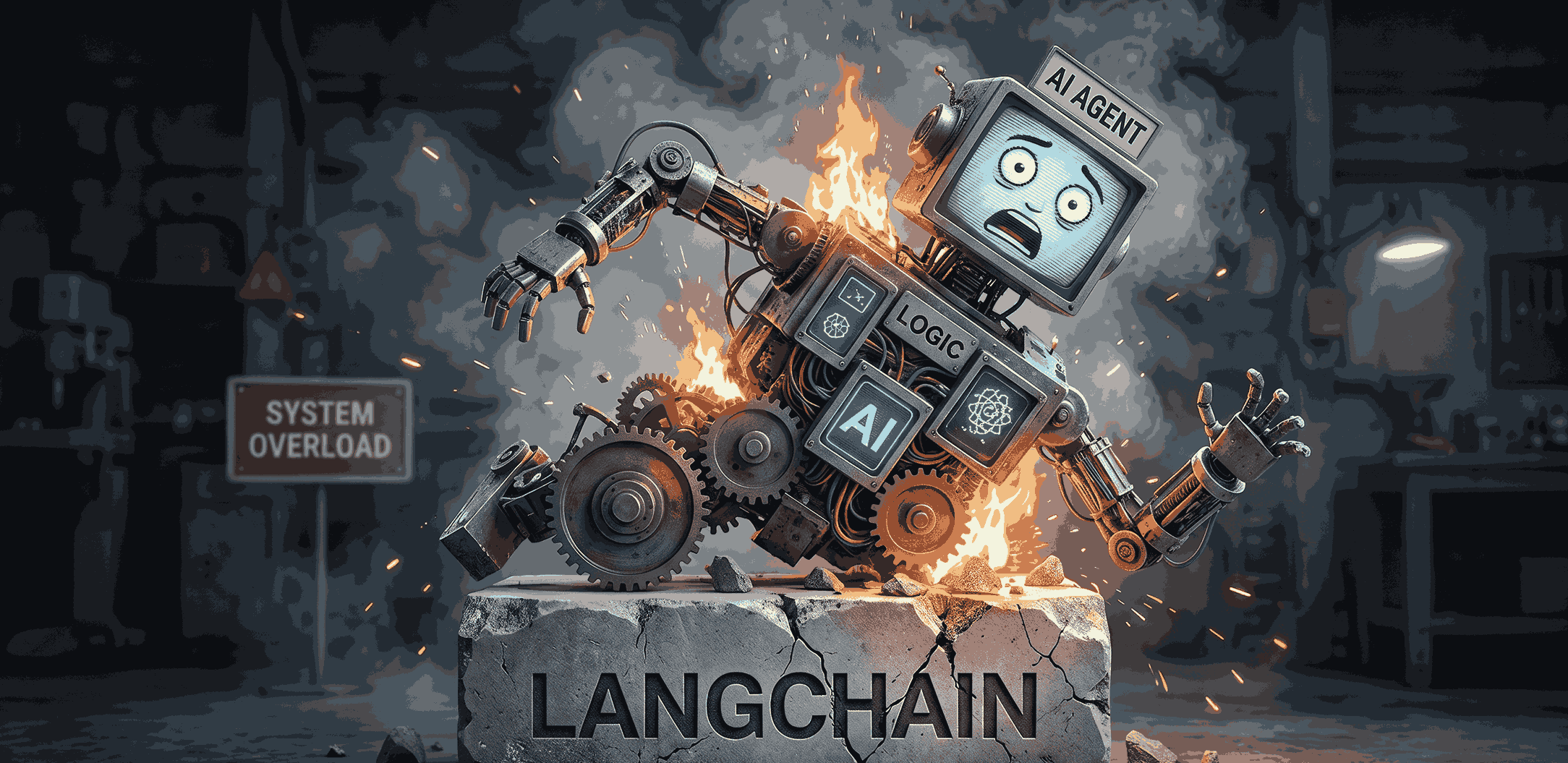
When traditional software fails, you read the code to find the bug. When an AI Agent fails, looking at the LangChain configuration code is entirely useless. The code only contains the prompt and the tool definitions; it does not contain the emergent decision-making logic. The only true source of truth lies in the execution traces. If you deploy using pure LangChain without real-time monitoring tools, you are driving at top speed with your eyes closed. You are leaving your system “flying blind” in production.
Furthermore, when an AI Agent built solely on LangChain makes a mistake, it rarely throws a convenient “500 Internal Server Error.” Instead, it fails silently. It might confidently execute a flawless Python function using entirely hallucinated data. If you are forced to dig through massive, nested JSON outputs in a raw console log just to figure out why your agent skipped a crucial reasoning step, you have already lost.
The only true source of truth lies in the execution traces. If you deploy using pure LangChain without real-time, visual monitoring tools, you are driving at top speed with your eyes closed. You are leaving your system “flying blind” in production.
2. A Real-World Disaster in High-Stakes Environments
To truly grasp the limitations of LangChain, let’s place it in a high-stakes scenario: Healthcare.
Imagine deploying a multi-agent system to automate medical records and insurance approvals at the Oncology Department of Hue University of Medicine and Pharmacy Hospital.
-
Agent 1 (Clinical Documentation): Tasked with scanning thousands of electronic health records, extracting complex clinical metrics (for instance, evaluating the HBV infection status in patients with primary liver cancer), and compiling a comprehensive medical profile.
-
Agent 2 (Payer Authorization): Takes the profile from Agent 1, navigates the insurance portal, and automatically handles the authorization negotiations.
On a localized developer demo, this system looks perfect, potentially reducing a grueling 5-day administrative process to just 4 hours. But what happens in the chaotic reality of production?
Consider the phenomenon of the cascading failure. What if Agent 1 encounters a vaguely worded physician’s note and hallucinates? It might confuse “Patient has a family history of HBV” with “Patient is currently infected with active HBV.” Because LangChain lacks native semantic anomaly detection, Agent 1 confidently outputs a fabricated diagnostic code.
Agent 2, acting autonomously, takes this false premise as absolute truth. It then files a highly confident, legally binding, but medically false insurance claim. No system crashes. No error logs are generated. It is a silent failure that could lead to denied care for the patient and severe compliance audits for the hospital.
Alternatively, what if the insurance portal updates its UI slightly? Agent 2 might get confused and trapped in an infinite loop, repeatedly calling a paid API to submit the same document, burning through thousands of dollars in server costs in a matter of minutes. In these life-or-death and high-liability scenarios, LangChain cannot proactively alert you or intervene. By the time human operators notice the failure, the damage is already done.
3. The Era of AgentOps: Observability, Evaluation, and Optimization
To prevent AI projects from becoming massive technical debt, top engineers in 2026 have realized a fundamental truth: Writing code for an AI Agent is just step one. Operating, monitoring, and optimizing it is the actual job.
This is where basic frameworks step aside for the AgentOps platform. A proper Agent Operations framework fills all of LangChain’s blind spots through three critical layers:
-
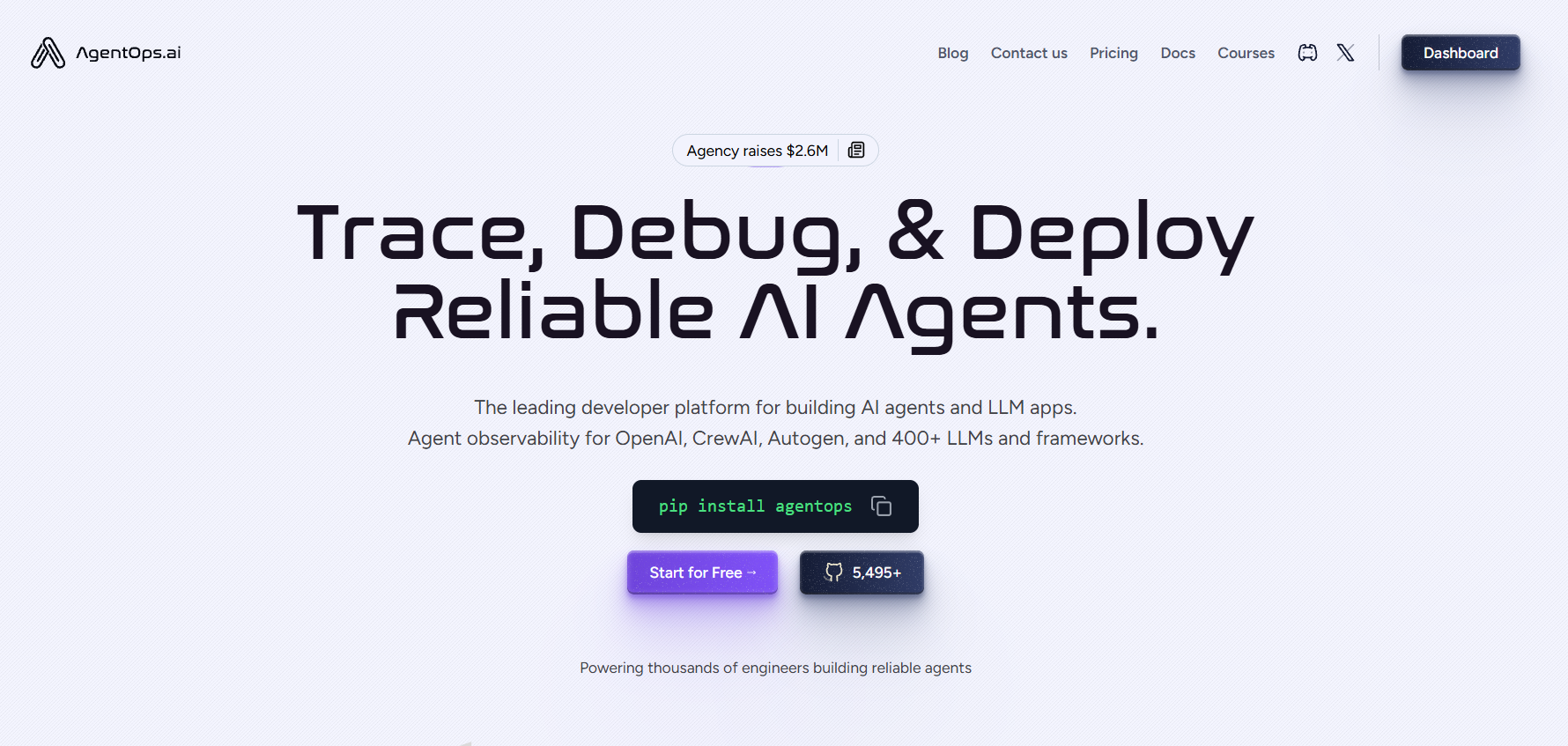
Layer 1 – Observability: You cannot improve what you cannot see. AgentOps provides a comprehensive dashboard tracking End-to-End Trace Duration and Cost per Request. If an agent gets stuck calling an API repeatedly, the observability system instantly detects the spike in Tool Execution Latency and triggers an automatic failsafe before the budget evaporates.
-
Layer 2 – Evaluation: Observability tells you what the system is doing; Evaluation tells you if it is doing it right. AgentOps continuously monitors the Factual Accuracy Rate and Guardrail Violation Rate. Any sign of an AI Agent leaking sensitive data (PHI leaks) is immediately blocked and isolated for human review, keeping the violation rate strictly at 0%.
-
Layer 3 – Optimization: Armed with data from the first two layers, teams can optimize. Platforms like AgentOps track Prompt Token Efficiency. By identifying wasted tokens, engineering teams can refine their prompts and slash infrastructure costs by up to 39% per request without sacrificing output quality.
Conclusion
In 2026, LangChain remains a fantastic library for snapping the initial building blocks together. However, treating it as a comprehensive solution for deploying an AI Agent to the market is a critical mistake. Enterprises need to stop patching together basic frameworks and start investing seriously in proper observability infrastructure.
Integrating AgentOps does not just give you x-ray vision into your non-deterministic systems. It is the only guarantee that allows you to confidently run agentic workflows at scale, protecting your users, your data, and your company’s bottom line.
Leave a Reply